
Root Canal Treatment in Kathmandu: What to Expect
Root canal treatment in Kathmandu is one of the most misunderstood dental procedures — most people dread it based on outdated stories, when in reality modern root canal treatment is routine, largely painless, and often the difference between saving a tooth and losing it. If your dentist has recommended a root canal, knowing exactly what happens at each step can make the entire experience far less intimidating.
This guide walks through what root canal treatment in Kathmandu actually involves, from the first signs you need one to full recovery.
What Is a Root Canal?
Inside every tooth, beneath the enamel and dentin, is a soft tissue called pulp — made up of nerves, blood vessels, and connective tissue. When this pulp becomes infected or inflamed, usually from deep decay, a cracked tooth, or repeated dental procedures, it causes pain and can lead to a dental abscess if left untreated.
Root canal treatment (RCT) removes the infected pulp, cleans and disinfects the inside of the tooth, and seals it to prevent reinfection — allowing you to keep your natural tooth instead of having it extracted.
Signs You Might Need Root Canal Treatment
- Persistent or throbbing tooth pain, especially when chewing or biting down
- Prolonged sensitivity to hot or cold that lingers after the stimulus is removed
- Swelling or tenderness in the gums near a specific tooth
- A small pimple-like bump on the gum (a sign of infection/abscess)
- Tooth discoloration — darkening of a single tooth
- A cracked or chipped tooth exposing the inner pulp
- Pain that suddenly stops (this can mean the nerve has died — not that the problem is resolved)
Not everyone experiences obvious pain before needing a root canal, which is why regular dental check-ups matter — some infections are only caught on X-ray.
What to Expect During Root Canal Treatment in Kathmandu
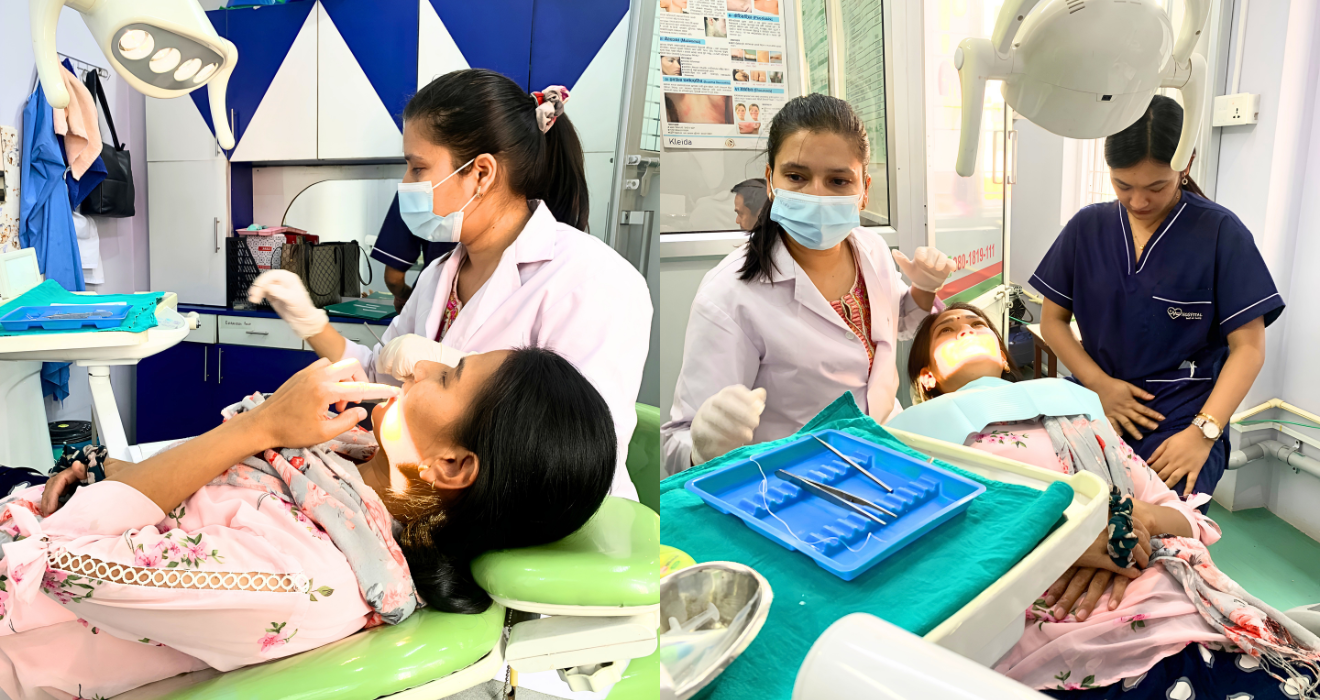
Before the procedure Your dentist will take an X-ray to assess the extent of infection and the shape of the tooth’s root canals. Local anesthesia is administered so you feel no pain during the procedure — this is the step most patients are surprised by, since modern RCT is far more comfortable than its reputation suggests.
During the procedure
- A small opening is made in the top of the tooth to access the pulp chamber
- The infected or dead pulp tissue is carefully removed
- The canals are cleaned, shaped, and disinfected to eliminate bacteria
- The cleaned canals are filled and sealed with a biocompatible material
- A temporary filling is placed, or in some cases, a permanent restoration begins the same day
Most root canal treatment in Kathmandu takes 1 to 3 visits, depending on the tooth’s location, the number of canals, and the severity of infection. Front teeth with a single canal are often completed faster than molars, which have multiple canals and more complex anatomy.
After the procedure A tooth that has undergone root canal treatment usually needs a crown afterward, especially for molars, since the tooth can become more brittle without its blood supply. Your dentist will advise whether a crown is needed based on how much natural tooth structure remains.
Root Canal Treatment Cost in Kathmandu
Cost depends on the tooth type, number of canals, infection severity, and technique used (manual vs rotary/endomotor). Based on current pricing across Kathmandu Valley dental clinics, typical ranges are:
| Tooth Type | Approximate Cost (NPR) |
|---|---|
| Anterior (front) tooth | 6,000 – 10,000 |
| Premolar | 10,000 – 12,000 |
| 1st Molar | 12,000 – 14,000 |
| 2nd Molar | 13,000 – 15,000 |
| 3rd Molar (wisdom tooth) | 15,000 – 18,000 |
A crown after root canal treatment typically adds an additional NPR 8,000–26,000 depending on the material chosen (metal, metal-ceramic, or zirconia). Specialist-performed or retreatment cases usually cost more than a standard RCT. Ask for a full written treatment plan before starting so there are no surprises.
Root Canal vs Tooth Extraction
A common question patients ask is whether it’s better to save the tooth or simply have it removed. In most cases, saving the natural tooth is the better long-term option:
| Factor | Root Canal Treatment | Tooth Extraction |
|---|---|---|
| Keeps natural tooth | Yes | No |
| Chewing function | Fully preserved | Requires replacement (implant/bridge) |
| Long-term cost | Lower (RCT + crown) | Often higher (extraction + implant/bridge) |
| Recovery time | A few days | Longer, especially for surgical extraction |
| Effect on nearby teeth | None | Can cause shifting over time |
The American Association of Endodontists notes that root canal-treated teeth, with proper care, can function for a lifetime — making it the preferred option whenever a tooth can realistically be saved.
Recovery and Aftercare
- Mild soreness for a few days after the procedure is normal and manageable with over-the-counter pain relief
- Avoid chewing on the treated tooth until a permanent crown or filling is placed
- Maintain regular brushing and flossing, but be gentle around the treated area initially
- Attend the follow-up appointment for crown placement — skipping this step increases the risk of the tooth fracturing later
- Contact your dentist if pain, swelling, or an unpleasant taste continues beyond a few days, as this could indicate the infection hasn’t fully cleared
What Happens If You Delay Root Canal Treatment
Putting off treatment doesn’t make the problem go away — it usually makes it worse. Delayed infection can spread to the jawbone, cause a painful abscess, and in more severe cases, affect overall health if left untreated for a long time. What could have been a straightforward root canal often turns into an extraction once the infection has progressed too far to save the tooth.
When to See a Dentist for Root Canal Treatment in Kathmandu
Book a dental consultation if you notice:
- Tooth pain that lasts more than a day or two
- Sensitivity to hot or cold that lingers
- Visible swelling near a tooth
- A tooth that has darkened compared to the others
- Any pain following a recent filling, crown, or dental injury
How Mero Hospital Can Help
Getting timely, comfortable root canal treatment in Kathmandu starts with an accurate diagnosis and a clear treatment plan. Mero Hospital supports this with:
- Dental Consultation — evaluation, X-rays, and root canal treatment performed by experienced dentists
- Online OPD — for an initial consultation if you’re unsure whether your symptoms need urgent dental attention
- Doctor On Call — for patients needing broader medical support alongside dental treatment
- Home Sample Collection — for cases where blood tests are needed before a procedure, such as for patients with diabetes or bleeding disorders
If you’re experiencing tooth pain and think you might need a root canal, book an appointment with Mero Hospital or call +977 9801819111.
Frequently Asked Questions
Is root canal treatment painful? With modern local anesthesia, root canal treatment itself is largely painless. Some mild soreness for a few days afterward is normal and manageable with standard pain relief.
How many visits does root canal treatment in Kathmandu usually take? Most cases take 1 to 3 visits depending on the tooth and severity of infection. Front teeth with a single canal can sometimes be completed in a single visit, while molars with multiple canals often need more.
Do I need a crown after a root canal? In most cases, yes — especially for molars, since the tooth becomes more brittle after treatment. Your dentist will assess whether a crown is necessary based on how much of the natural tooth remains.
How long does a root canal-treated tooth last? With a proper crown and good oral hygiene, a root canal-treated tooth can last many years, often a lifetime, functioning just like a natural tooth.
Is it better to extract the tooth instead of getting a root canal? In most cases, saving the natural tooth through root canal treatment is preferable, since it preserves chewing function and avoids the higher long-term cost of extraction followed by an implant or bridge.
What happens if I delay root canal treatment? Delaying treatment allows the infection to spread, which can lead to an abscess, bone loss around the tooth, and in more advanced cases, may make the tooth impossible to save — resulting in extraction.