
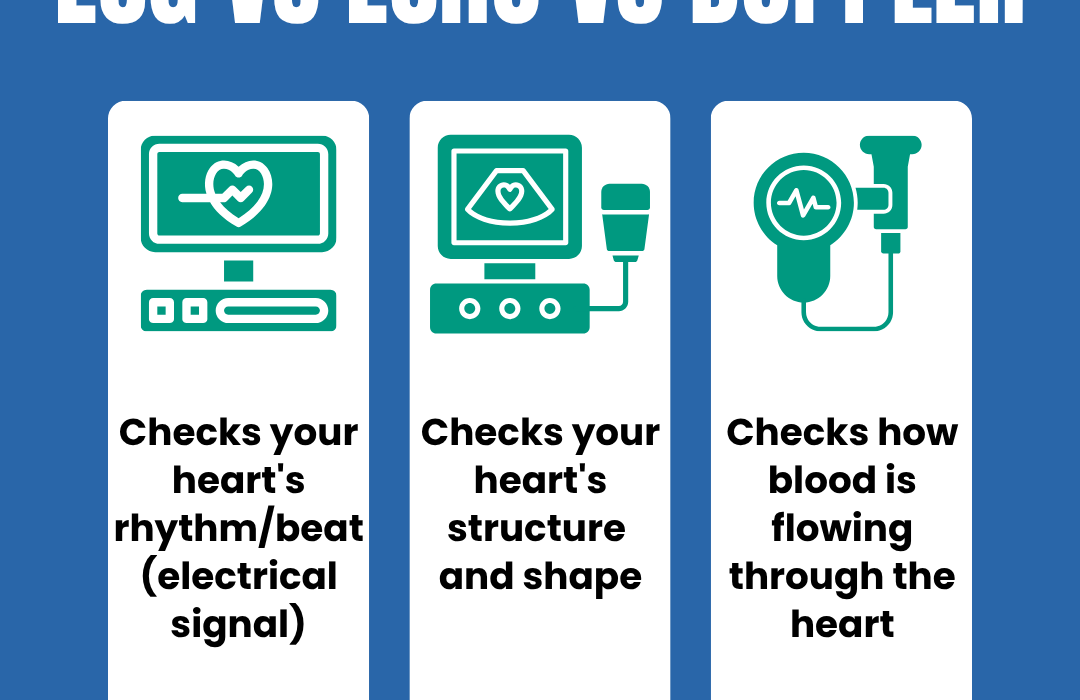
ECG, ECHO & Doppler Tests in Kathmandu: What Each One Checks
If your doctor has ordered an ECG, ECHO & Doppler test, it’s natural to wonder what each one actually checks and why you might need more than one. All three look at heart and blood vessel health, but they measure completely different things. So, this guide breaks down what each test does, how long it takes, and when your doctor is likely to order it — that way, you walk into your appointment already knowing what to expect.
Quick Answer
An ECG records the heart’s electrical activity to check rhythm and detect arrhythmias or past heart attacks. An ECHO (echocardiogram) uses ultrasound to show the heart’s structure, chambers, and pumping function. Meanwhile, a Doppler study measures blood flow speed and direction through vessels, and doctors often use it alongside an ECHO or on its own to check circulation. Depending on your symptoms, your doctor may order one, two, or all three.
What Is an ECG?
An ECG (electrocardiogram, sometimes called EKG) is a quick, painless test that records the electrical signals controlling your heartbeat. First, a technician places small sensors on your chest, arms, and legs; the whole process takes just a few minutes. Because it’s so fast and simple, doctors typically order it first whenever they suspect an irregular heartbeat, chest pain, or a possible past heart attack. According to the American Heart Association, an ECG remains one of the simplest and fastest ways to detect abnormal heart rhythms and evidence of prior cardiac damage.
An ECG can help detect:
- Irregular heart rhythms (arrhythmia)
- Signs of a current or past heart attack
- Heart muscle thickening or strain
- Effects of certain medications on the heart
What Is an ECHO (Echocardiogram)?
An ECHO uses ultrasound waves — the same technology doctors use in pregnancy scans — to create a moving picture of your heart. Unlike an ECG, which only records electrical activity, an ECHO actually shows the heart’s chambers, valves, and walls in motion. As a result, the doctor can see how well the heart is pumping and whether the valves open and close properly.
An ECHO can help detect:
- Weak or reduced heart pumping function
- Valve problems (leaking or narrowed valves)
- Structural issues like an enlarged heart or thickened walls
- Fluid around the heart
What Is a Doppler Study?
A Doppler study is a type of ultrasound that measures the speed and direction of blood flow through blood vessels or through the heart itself. Doctors often combine it with an echocardiogram — in that case, they call it a “2D Echo with Doppler.” On its own, however, doctors commonly use Doppler ultrasound to check blood flow in the legs, neck arteries, or abdomen.
A Doppler test can help detect:
- Blood clots (such as deep vein thrombosis)
- Narrowed or blocked arteries
- Poor circulation in the legs
- Blood flow patterns through heart valves
ECG vs ECHO vs Doppler: Side-by-Side Comparison
| Test | What It Checks | Duration | Commonly Ordered For |
|---|---|---|---|
| ECG | Electrical activity & heart rhythm | 5–10 minutes | Chest pain, palpitations, irregular pulse, routine cardiac screening |
| ECHO | Heart structure & pumping function | 20–40 minutes | Breathlessness, suspected valve disease, heart failure symptoms |
| Doppler | Blood flow speed & direction | 15–30 minutes | Leg swelling, suspected clots, circulation problems, pregnancy monitoring |
When Your Doctor Might Order These Tests
Your doctor may refer you for an ECG, ECHO, or Doppler test if you experience:
- Chest pain, tightness, or discomfort
- Palpitations or a racing/irregular heartbeat
- Unexplained breathlessness, especially on exertion
- Swelling in the legs or ankles
- Dizziness or fainting spells
- A family history of heart disease combined with routine screening
- Follow-up monitoring after a diagnosed heart condition
ECG, ECHO & Doppler Tests at Mero Hospital, Kathmandu
Mero Hospital’s radiology and diagnostic team performs ECG, ECHO, and Doppler studies at our Buddhanagar, Kathmandu facility, and our consultant radiologist and cardiology specialists personally review every report. What’s more, we frequently pair these tests with an OPD consultation, so your cardiologist or general physician can review your ECG or ECHO results in the same visit and recommend next steps immediately.
For patients who can’t travel easily — elderly patients, those recovering from surgery, or anyone managing a chronic heart condition — our home care team can help coordinate testing alongside home nursing and doctor-on-call services.
Cost of ECG, ECHO & Doppler Tests in Kathmandu
Pricing varies by test type, and it also depends on whether you book individually or as part of a wellness/cardiac package. For instance, Mero Hospital’s Cardiac Package (Basic) bundles common cardiac screening tests at a discounted rate — call the hotline or check the Wellness Packages page for current pricing.
How to Book an ECG, ECHO, or Doppler Test
- Call the Mero Hospital hotline at +977 9801819111 or message on WhatsApp
- Or visit the Appointment page and select Radiology
- Mention any symptoms or your doctor’s referral so the team schedules the right test
- Visit our Buddhanagar, Kathmandu facility at your scheduled time
- Afterward, our radiologist reviews your reports and shares them with your consulting doctor for next steps
Frequently Asked Questions
Do I need all three tests — ECG, ECHO, and Doppler — at once? Not usually. Your doctor typically starts with an ECG, and only adds an ECHO or Doppler if the results or your symptoms point to a structural or circulation issue that needs closer imaging.
Is any special preparation needed before an ECG, ECHO, or Doppler test? Generally, none of the three tests requires special preparation. That said, you may need to avoid heavy meals or caffeine before certain tests — Mero Hospital’s team will confirm any specific instructions when you book.
Are these tests painful? No. All three are non-invasive and painless. For an ECG, a technician simply places sensors on your skin; for ECHO and Doppler, they use a handheld ultrasound probe with gel on the skin instead.
How soon will I get my results? You’ll typically get ECG results immediately. ECHO and Doppler reports are usually ready the same day, so you can review them with your doctor right after.
Can these tests be done as part of a health checkup package? Yes. Mero Hospital’s Cardiac Package and several wellness packages include ECG as standard screening, and you can add ECHO or Doppler based on your doctor’s recommendation.
Conclusion
ECG, ECHO, and Doppler tests each answer a different question about your heart and circulation — electrical rhythm, structural function, and blood flow. Once you understand what each one checks, your doctor’s referral makes a lot more sense. So if you’re dealing with symptoms like chest discomfort, breathlessness, or leg swelling, don’t wait to get checked.
Need to book a cardiac screening? Book your appointment with Mero Hospital or call +977 9801819111 to schedule your ECG, ECHO, or Doppler test in Kathmandu.